A niche website is one of the most reliable ways to make money online, and it's also one of the most misunderstood. Most people think bigger is better. For example, a site about “health and fitness” instead of one about weight loss for new moms. Or perhaps a site about “cooking” instead of one about gluten-free meal prep. That instinct is actually backwards.
A niche site trades a huge, crowded audience for a smaller, more specific one, and that trade is almost always worth it. Below, I’m breaking down what makes a niche profitable, how to find one that fits you, and 10 real examples of niche sites that turned a focused topic into real monthly income.
Want to see this explained on camera first? Watch the video version, or skip straight to the written breakdown below.
What Is a Niche Website?
A niche is a small, specific category of interest inside a much larger market. Health and fitness is a market. “Weight loss for women over 50” is a niche inside it. Cooking is a market. “Gluten-free meal prep for busy parents” is a niche inside it.

A niche website exists to answer questions and solve problems for that smaller, more focused audience, not to be everything to everyone. That focus is the entire advantage.
Why a Niche Beats a Broad Website
Three reasons a focused site consistently outperforms a broad one:
- Increased visibility. It’s more valuable to get in front of the right people than a lot of people. A site with deep, focused content on one topic has a much better shot at ranking and being seen as the answer in that specific space.
- Reduced competition. Fewer sites are competing for the exact same narrow topic, which means a much higher chance of turning a visitor into a reader, subscriber, or customer.
- Higher retention. If you want to learn to bake, are you going back to a giant general cooking site, or the smaller site that’s only about baking for beginners? People come back to the source that has all the answers for their specific problem.
Focus tradeoff
Niche Site vs. Broad Site
Niche wins when
- You can name the exact buyer Weight loss for women over 50 is a person you can write to.
- Competition is real but beatable Existing sites prove demand without owning every keyword.
Broad hurts when
- You try to cover a whole industry Health, cooking, and fashion are too wide to rank or retain.
- You cannot say who it is for If the About page could belong to anyone, the niche is not specific enough.
How to Find a Niche That Actually Works
Choosing a niche is really just categorizing yourself or your business. People want to put you in a box, so give them a clear one to put you in. Here’s the process, boiled down to five steps:
- Brainstorm broadly first. Don't start by guessing your exact customer, when you're new to a market you usually don't know that yet anyway. Start with what you're knowledgeable in and genuinely willing to talk about constantly, whether that's fitness, food, or clothing, and do a real content dump of every related sub-topic underneath each one before you narrow anything down.
- Go two or three levels deeper. “Fitness” isn’t a niche. “Home workouts for college students without gym access” is. Ask yourself: what am I doing this for, who specifically needs it, and what problem am I solving for them?
- Check that a real market exists. Search the topic, see who’s already active in it, and look at what they sell and how they make money. Competition is a good sign, not a bad one. It means there’s a real market underneath your niche.
- Make sure it solves a problem. Passion helps, but it isn’t enough on its own. The niches that turn into real businesses solve something specific for someone specific.
- Test it before going all-in. Build a simple landing page, offer something free related to the niche, and drive a small amount of traffic to it. The response tells you whether there’s real demand before you invest months into a full site.
One more filter before you commit: can you publish 20 solid articles (or 20 product pages) without repeating yourself? If the topic runs dry after five posts, it is usually too thin to build a business on. The niches in the table above all have ongoing questions, product refreshes, or seasonal demand that keep content and offers fresh.
A good rule of thumb: pick something you could talk about for two hours straight without running out of things to say. If a topic makes you lose track of time, there’s almost always a large audience waiting inside it, along with plenty of affiliate products to promote.
10 Real Niche Website Examples
These are real niche sites, pulled straight from the field: what they're about, how they make money, and what they were reported to earn. Treat the revenue numbers as a snapshot of what's possible with a focused niche, not a live, current figure for each specific site. Income like this moves around based on traffic, ad rates, and how active the owner still is.
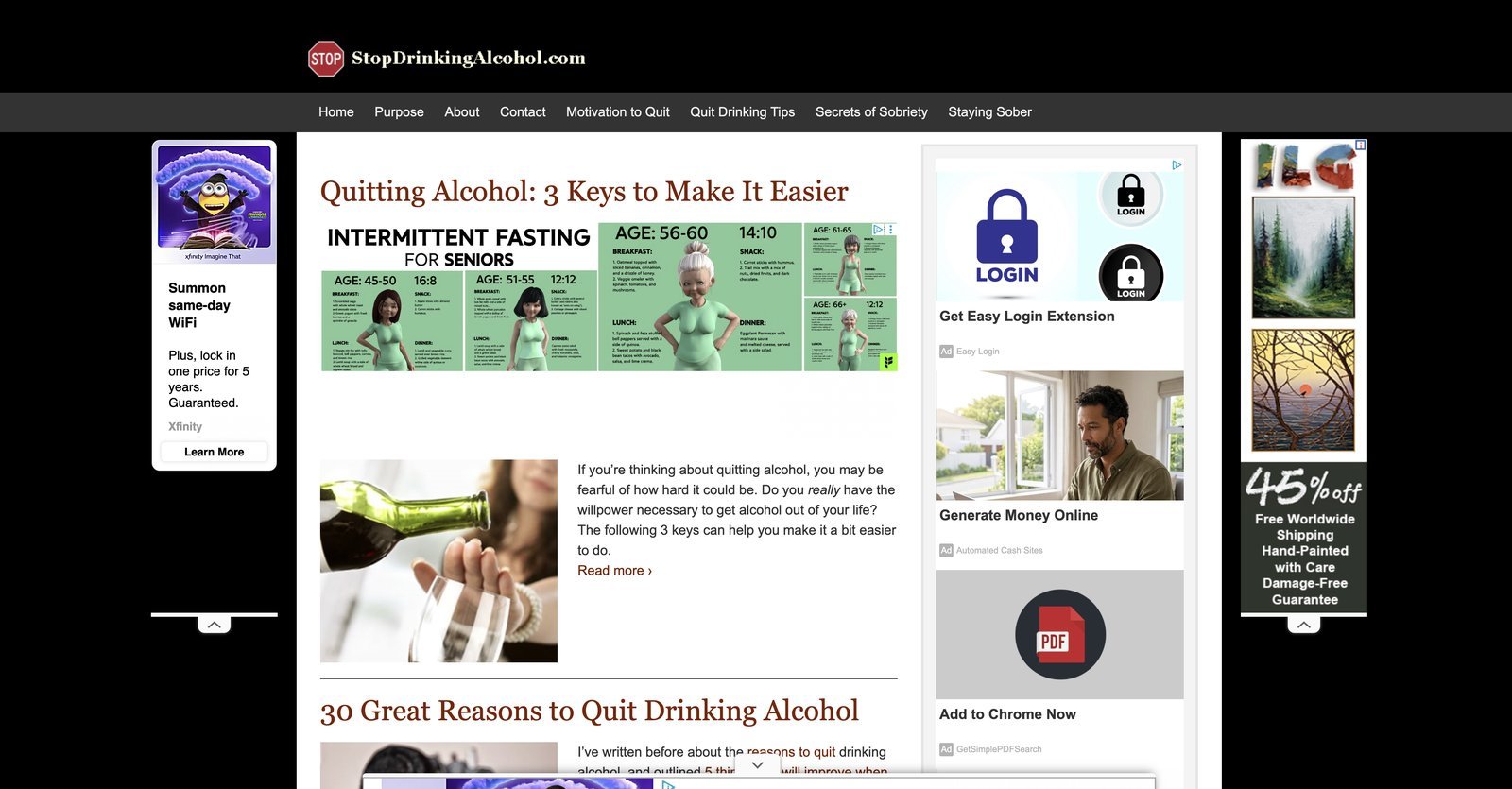
Here's a quick scroll through several of the sites from the table above, so you can see how plain some of these genuinely profitable niche sites actually look:
Very Vegan Recipes is a good example of that: a simple recipe blog with no frills, still earning through AdSense and Amazon affiliate links.
The screenshot shows one option in context. Use the table to compare it against the alternatives before you commit.
| Site | Niche | How It Makes Money | Reported Revenue |
|---|---|---|---|
| Stop Drinking Alcohol | Sobriety / addiction recovery | Google AdSense | ~$1,800/mo |
| Scooter Madness | Motorized recreational vehicles (dropshipping) | Dropshipping | ~$2,300/mo · sold for $60K+ |
| Thinking Outside the Sandbox | Parenting advice | AdSense + Amazon affiliate | ~$3,000/mo |
| Trendy Resumes | Downloadable resume templates | Digital downloads | ~$1,719/mo · sold for $70K |
| The Prepper Journal | Outdoor survival & preparedness | AdSense + affiliate (Amazon + other) | ~$1,562/mo · sold for $159K |
| Very Vegan Recipes | Vegan cooking | AdSense + Amazon affiliate | ~$1,000/mo |
| Creepypasta | Horror stories (fan-submitted) | Google AdSense | ~$1,897/mo |
| Space Chariot | Hoverboards (dropshipping) | Dropshipping + Facebook ads | ~$22,000/mo |
| Need Those Sneakers | Sneakers (dropshipping) | Dropshipping + Facebook ads | ~$10,000/mo · ~167K visitors/mo |
| Urgent Business Forms | Legal & business form downloads | Digital downloads + Google ads | ~$3,700/mo · sold for $55K |
A few patterns worth pulling out of that table. Half of these sites make money without ever touching a physical product: AdSense, affiliate links, and digital downloads all scale without inventory. The dropshipping sites (Scooter Madness, Space Chariot, Need Those Sneakers) prove a tightly focused product niche can outearn a much broader store, because narrow targeting makes paid ads dramatically more efficient. And a site doesn't need to look impressive to make money. Creepypasta is a plain, dated-looking site that still pulls in real AdSense revenue purely on the strength of its content.
Three of the examples from the video walkthrough, so you can see what these sites actually look like on screen:
Scooter Madness is the opposite content style, a dropshipping storefront instead of a content site, and it still sold for over $60K on the strength of one narrow product niche.
Space Chariot is the same dropshipping model at a much bigger scale, hoverboards instead of scooters, pulling in roughly $22,000 a month on paid traffic to one tightly focused product page.
Notice what these niches have in common: every one of them solves a specific problem for a specific audience: quitting drinking, surviving a disaster, finding a resume template, buying a sneaker. None of them try to be everything to everyone.
How to Monetize a Niche Website
The 10 examples above cover the four monetization paths almost every profitable niche site uses:
Most niche sites stack income streams instead of relying on one. Ads and affiliate links often pay first while traffic is still growing; digital products and email lists compound once you know which topics readers actually finish. Track which posts earn clicks in Search Console, then double down on those keywords before you add a fourth monetization model.
| Most flexible Affiliate | Display ads | Digital downloads | Dropshipping | |
|---|---|---|---|---|
| Startup cost | Low | Low | Low–med | Med (ads) |
| Inventory needed | No | No | No | No* |
| Traffic required | Med–high | High | Med | Paid OK |
| Best niche fit | Reviews / how-tos | Guides / blogs | Templates / forms | Narrow product |
Swipe to compare more options. Affiliate stays pinned.
*Dropshipping skips physical inventory, but you still manage suppliers, ads, and support. Affiliate is the most flexible starting point for content niches.
- Display ads (Google AdSense): the simplest path. You need consistent traffic, but no product, inventory, or fulfillment of any kind.
- Affiliate marketing: recommend products you’d genuinely use (often through Amazon Associates) and earn a commission when readers buy through your link.
- Digital downloads: sell something once, deliver it infinitely. Templates, guides, and forms are all fully passive after you build them.
- Dropshipping: sell a physical product without ever touching, storing, or shipping it yourself. Works especially well when the niche is narrow enough to make paid ads efficient.
If a dropshipping store is the direction you’re leaning, our online store guide walks through the exact setup, store, products, and checkout, from scratch.
Turning Your Niche Into a Real Website
Once you’ve landed on a niche, the build itself is the easy part. You’ll need hosting first. I use Hostinger on every site I build. It’s reliable, it’s fast, and it’s the one I recommend to beginners without hedging.
From there, match the platform to the niche. A content-heavy niche (blog, recipes, guides) fits our blog setup guide, a service-based niche fits the business website guide, and a product-based niche, dropshipping included, fits the online store guide. If your niche is built around showcasing client work or creative projects, use the portfolio website guide.
When you're ready to build, keep the stack simple: hosting, WordPress, a lightweight theme, and a page builder. Our Astra theme review and Elementor tutorial cover the exact combo I use on client niche sites.
How Narrow Is Narrow Enough
“Health” is not a niche. “Meal prep for night-shift nurses” is. You want a topic where you can name the reader, their problem, and the outcome in one sentence. Weatherproof jackets for hikers beats outdoor gear for everyone.
Go two or three levels deep after brainstorming. List passions, skills, and problems you have solved. Cross out ideas where you can't imagine twenty articles without repeating yourself. Competition exists in every profitable corner; narrow focus is how you beat generalists in search and trust.
Passion helps, but knowledge plus consistency wins when passion fades. You can tolerate a topic you are good at even if you would not blog about it on vacation. Helping people solve a concrete problem can become the passion.
Examples in this post (sobriety, scooters, parenting hacks) share one trait: obvious monetization paths. Ads, affiliate, or products. Read website builders compared only after the niche is chosen; platform second, audience first.
Write the positioning sentence before you buy hosting: “I help [specific person] do [specific outcome] without [pain].” If you cannot fill the brackets, keep narrowing.
Competition in a niche means money exists. Zero competition often means zero search volume. Aim for beatable SERPs with clear affiliate products or ad RPM benchmarks you can research in ten minutes.
Passion fades on month four. Knowledge and a content calendar keep you publishing when motivation dips. Outline twenty headlines before you register the domain.
Validating a Niche Before You Build
Start with a quick gut check before you register anything. Search the topic in Google and note who actually ranks: small blogs on page one mean entry is realistic, all Fortune 500 brands and you need a tighter long-tail angle or a different niche entirely.
Check Amazon and affiliate networks for products with real reviews too. No products at all usually means ads-only income (fine, just slower); too many means you'll need to differentiate with tutorials, comparisons, or templates instead of another generic review.
Then, run a tiny content test before spending a cent on hosting. Publish three posts on a free WordPress install or Medium, share them where that audience actually hangs out, and watch time on page and real replies. That tells you more than any keyword volume chart ever will.
Set a 90-day checkpoint once you commit. For example, 20 posts or products live, some pages indexed, first dollars or email signups in hand. Kill or pivot niches that miss that checkpoint instead of dragging a dead domain for years out of stubbornness. Before you write ten articles, talk to five real people in the target audience, comments in Reddit or Facebook groups reveal the exact language you should be mirroring in headlines, and no keyword tool gets you there on its own. Free tools and Ahrefs both show a rough cut of keyword difficulty; look for phrases where the top results are forums or thin pages, not NIH.gov and Mayo Clinic, unless you actually have medical credentials.
Pick One Monetization Model First
Pick one primary monetization model for the first six months instead of chasing all of them at once. AdSense needs volume, affiliates need buyer intent, and products need trust, spreading focus across ads, affiliates, products, and consulting at the same time just means you master none of them.
Match the model to how your specific niche actually behaves. Physical goods need shipping policies and digital downloads need refund clarity. A recipe blog, a dropshipping store, and a recovery site can all show the same proof of demand while monetizing in completely different ways.
Once you pick a lane, track outbound affiliate clicks with simple UTM parameters even before you have fancy dashboards, it tells you which article types drive real buyer intent versus curiosity clicks that never convert. Flippa listings and public income reports are good inspiration, not guarantees, copy the structure and the monetization model, not the exact keywords, unless you have the same skills and link profile as the seller.
Go Deep Instead of Wide
Build topical clusters instead of scattering. For example, one pillar post with five interlinked supporting articles ranks faster than fifty unrelated posts spread across ten different subtopics. Before you commit, be honest about whether you could publish twenty genuinely useful pieces without repeating yourself, if the well runs dry at five posts, the niche is too thin to build a real site around.
Narrow it down further. Name the product, the person, and the problem specifically. “Resume templates for nurses switching careers” beats “generic job advice” the same way “jackets for hikers” beats “outdoor gear.” If you can't name all three, keep brainstorming before you buy hosting.
It's also worth noting that tolerance beats fake passion here. You don't need to love the topic. You just need to know it cold and show up consistently. A steady weekly article beats a burst of ten posts followed by months of silence.
A few basics apply no matter which niche you land on. Add plain-language affiliate disclosures and ad labels near monetized links before traffic arrives, not after a reader emails asking why every post pushes the same Amazon product.
Use real, legal images from day one, our Elementor tutorial covers building clean hero sections once you're ready to make the first five pages look professional instead of another stock-photo cliché.
And don't abandon a page just because it underperforms, Search Console will show you pages with impressions but no clicks, and those are usually a title tweak or an updated example away from actually working.
When validation passes, build the real thing on WordPress for ownership, our step-by-step website guide and Astra theme review mirror exactly what we use on niche client sites. Speed matters here too, slow pages waste the ad and affiliate revenue you're trying to earn, so run through our WordPress performance guide before first traffic arrives.
One tactic worth stealing straight from StopDrinkingAlcohol.com: a clear sidebar with categories and a recent-posts list keeps someone actively researching a topic on the site longer, exactly what you want from any content niche.
Once you've seen the pattern across all these examples, here are the questions people ask most.
Frequently Asked Questions
What is a niche website?
A niche website is a site focused on a small, specific category of interest inside a larger market, like “weight loss for new moms” instead of “health and fitness.” It exists to answer questions and solve problems for a smaller, more focused audience rather than trying to serve everyone.
How much money can a niche website make?
It ranges widely. The real examples above run from about $1,000/month (a vegan recipe blog on AdSense) to $22,000/month (a dropshipping store selling hoverboards). Revenue depends on the monetization method, traffic volume, and how competitive the niche is, not the niche topic alone.
How do I choose a profitable niche?
Brainstorm broadly from what you're genuinely knowledgeable in, then narrow it two or three levels deep until it clearly states what you're offering and who it's for. Confirm a real market exists (competition is a good sign, not a bad one), make sure it solves an actual problem, then test it with a simple landing page before committing months to a full build.
Do I need to be passionate about my niche?
Passion helps, but being knowledgeable and consistent matters more. You don't have to love a topic as much as you can tolerate covering it long-term. Plenty of profitable niche sites run on expertise and consistency rather than pure passion.
What’s the best way to monetize a niche site?
Display ads (Google AdSense), affiliate marketing, digital downloads, and dropshipping are the four proven paths. Content-heavy niches usually lean on ads and affiliate links; product-focused niches usually lean on dropshipping or digital downloads. Most profitable sites end up combining two or more.
Is it too late to start a niche website?
No. New niches show up constantly as trends, products, and audiences shift, and a narrow niche has far less competition than a broad market regardless of when you start. The bigger risk is picking a niche too broad to ever rank in, not starting too late.
What platform should I build my niche website on?
WordPress gives you the most control and the most room to grow long-term, which is why it’s what I use and recommend. Match the build to your niche’s business model: a blog setup for content niches, an online store for product niches.
The pattern across every example above is the same. Pick something narrow enough to actually dominate, solve a real problem for the people in it, and match your monetization to what that specific audience already wants to buy. That’s the whole formula. The niche is the hard part to find. Building the site around it is the part I can walk you through.