Wix can take you from a blank account to a published website without asking you to buy hosting, install software, or touch code. That makes it a strong first choice for a simple business site, portfolio, event, or personal project.
Quick Answer: Is Wix the Right Builder for You?
My recommendation: use Wix when speed and visual control matter more than portability. Start with a template, keep the first version to five essential pages, and publish before you spend hours polishing tiny details. If you want the fastest possible draft, let Wix AI create the starting point and then rewrite it in your own voice.
Wix is a good fit if: you want the builder, hosting, security, forms, and business tools in one account. If you want deeper ownership and the ability to move the site more freely, compare it with WordPress before you commit.
What You’re Building in Wix
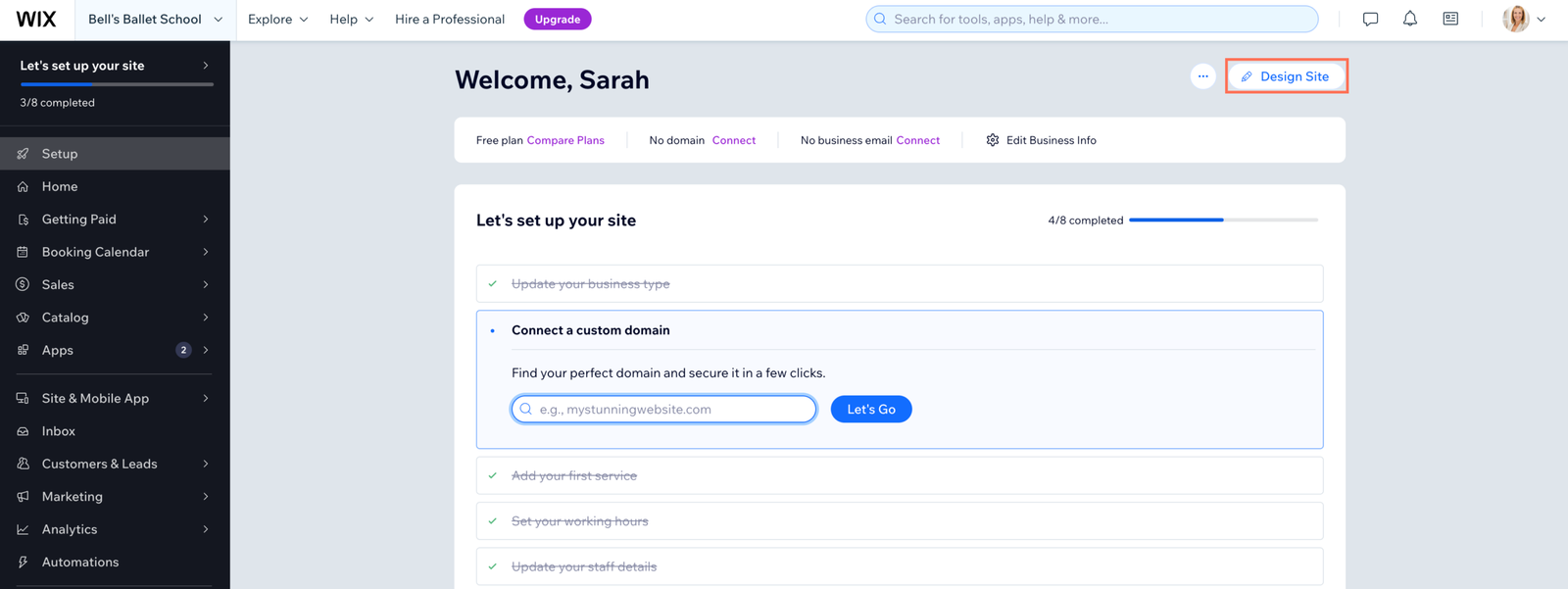
A Wix website has two working areas. The dashboard manages the business side: domain, contacts, apps, marketing, analytics, payments, and site settings. The Wix Editor controls what visitors see: pages, sections, text, images, buttons, menus, colors, and mobile layout.
You can create the first draft with Wix AI, customize a template, or begin from a blank canvas. For most beginners, a template is the best balance. It gives you a real layout to react to without letting an AI-generated draft decide the entire visual direction.
Before opening the editor, write one sentence that explains who the site is for and what you want that person to do. Then choose the closest planning guide: our business website guide, portfolio website guide, blog website guide, or online store guide. The builder changes, but the job of each page does not.
Step 1: Create Your Wix Account and Site
Go to Wix, create an account, and start a new site. Wix may ask what kind of site you are building, which features you need, and what the business is called. Answer with the real project in mind. These choices help Wix suggest templates, apps, and dashboard tools, but they do not lock you into a final design.
- Name the project clearly. Use the business, brand, or project name visitors will recognize.
- Choose the closest site type. A photographer, consultant, restaurant, and online store need different page and feature recommendations.
- Add only the functions you already need. Forms, bookings, a blog, and a store are useful. Installing every suggested app creates clutter.
- Keep the free site while building. Upgrade when you are ready to connect the real domain and remove Wix branding.
Do this before choosing a design: list the pages you need. A simple service site usually starts with Home, About, Services, Work or Testimonials, and Contact. Our website-building guide shows how those pieces fit together.
Step 2: Choose Wix AI or a Template
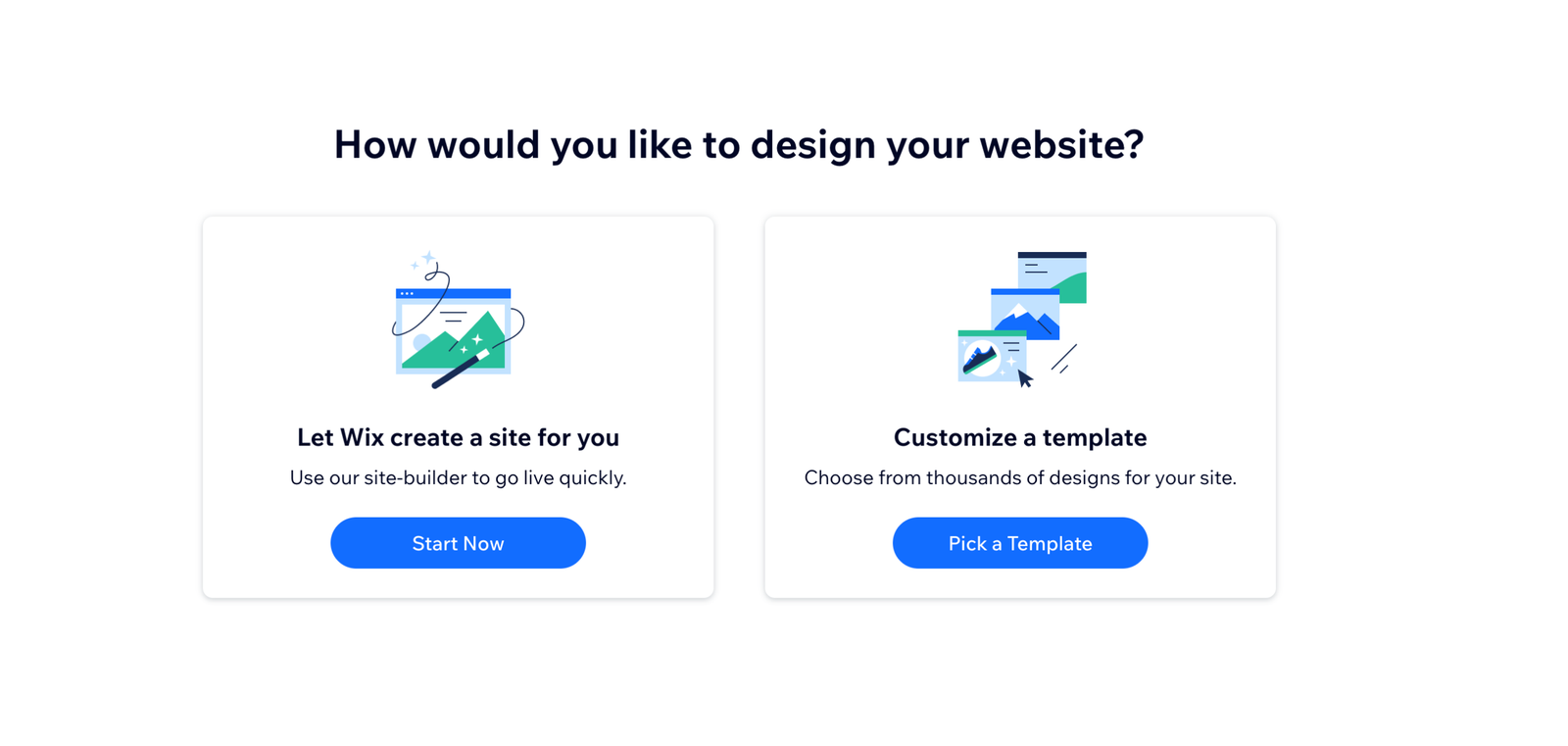
Wix AI Website Builder asks questions about the site, audience, services, and preferred style. It generates a first draft that you can regenerate or continue editing. This is useful when an empty page stops you from starting.
Templates let you browse a finished visual direction before committing. Pick one for its structure, not its demo photography. A template with the right header, page rhythm, galleries, and service layout will save more time than one that merely shares your favorite color.
| My beginner pick Wix Template | Wix AI Website Builder | |
|---|---|---|
| Best for | Choosing the design before editing | Getting a first draft online quickly |
| Starting speed | A few more choices up front | Fastest |
| Design control | Choose the visual direction first | Customize the generated draft |
| Blank-canvas risk | Low | Low |
| My recommendation | Use when the site’s look matters most | Use when you need momentum |
Swipe to compare more options. Wix Template stays pinned.
Start with a template if you want predictable control over the final design. Choose Wix AI when speed matters more than learning the layout from the beginning.
Avoid the blank canvas for your first Wix site unless you already understand spacing, typography, responsive behavior, and page hierarchy. Wix gives you a lot of freedom. A strong starting structure keeps that freedom from turning into a weekend of nudging boxes by five pixels.
Step 3: Learn the Wix Editor Without Getting Lost
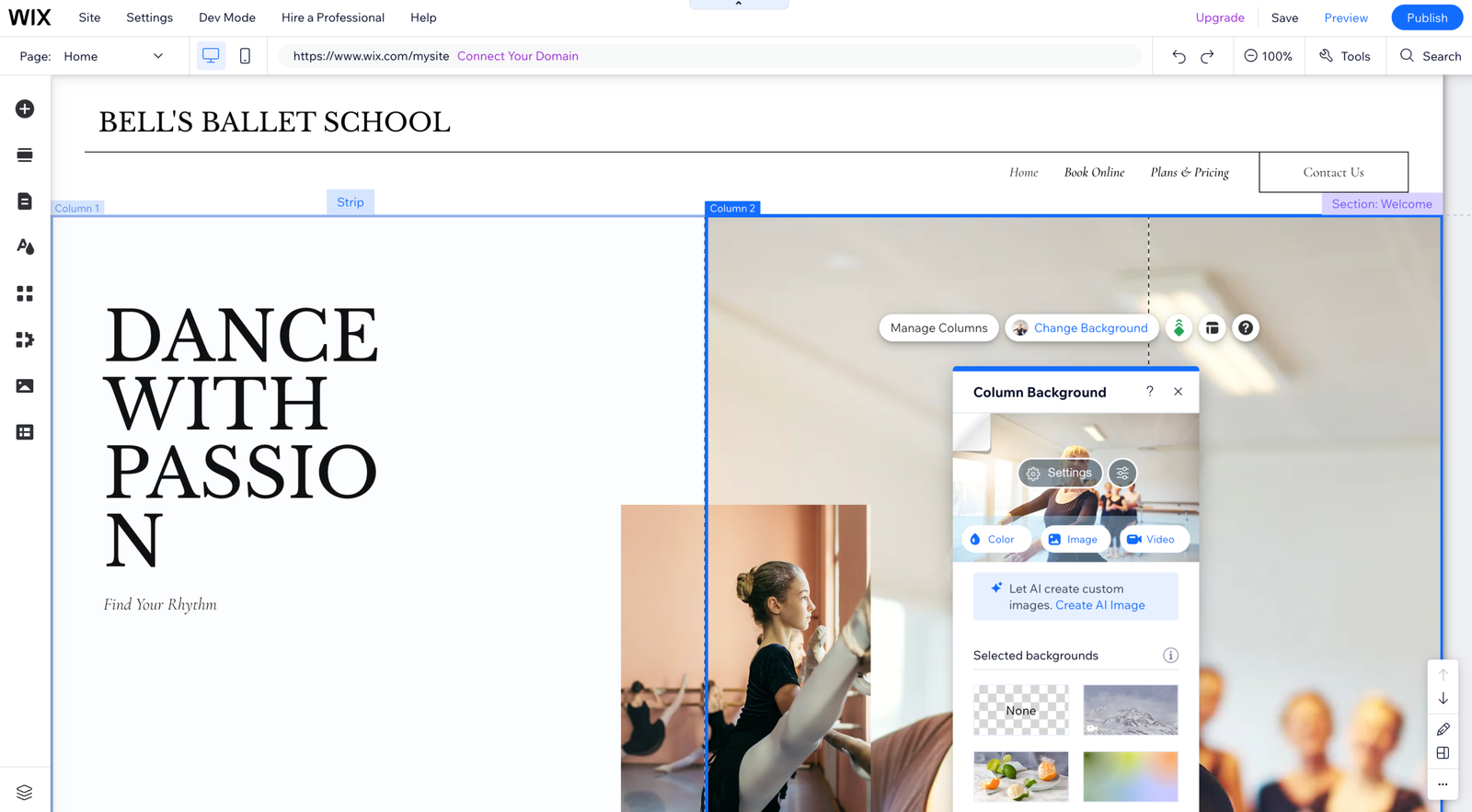
The editor looks busy because it contains everything you can add to the site. You only need to understand five controls at first:
- Pages and menu: create pages, rename them, set the homepage, and control navigation.
- Add elements: insert text, images, buttons, forms, galleries, videos, and other components.
- Sections: organize each page into clear horizontal groups such as hero, services, proof, and contact.
- Site styles: set the global colors and fonts so the entire site feels consistent.
- Desktop and mobile: switch views and correct any spacing or ordering problems before publishing.
Start by setting the site-wide colors and type styles. Choose one heading font, one body font, one primary color, one accent color, and a small neutral palette. Then reuse them. The fastest way to make a Wix site look homemade is to style each text box and button as a separate design decision. Our website design guide explains the visual hierarchy behind those choices.
One rule that prevents most Wix design problems: duplicate good sections instead of rebuilding them. Reusing the same spacing, heading sizes, button style, and image ratio creates consistency almost automatically.
Step 4: Replace the Demo Content
A template is only a container. Replace every generic headline, stock image, fake testimonial, placeholder address, and sample button with something that belongs to the real project.
Write the homepage in this order
- Hero: say what you do, who it helps, and the next action.
- Offer: show the main services, products, projects, or content categories.
- Proof: add results, testimonials, recognizable clients, credentials, or strong work samples.
- Process: explain what happens after someone clicks, books, buys, or contacts you.
- Final call to action: repeat the single best next step.
Write for a visitor who has never heard of you. “Welcome to our website” uses the most valuable space on the page without explaining anything. A headline such as “Brand photography for Austin restaurants” immediately tells the right person they are in the right place.
Use real images with a consistent shape
Upload the sharpest original images you have, crop similar images to matching ratios, and add useful alternative text when an image carries information. Do not stuff keywords into alt text. Describe what the image shows and why it matters on the page.
Make every button specific
Replace vague labels such as “Learn More” when a clearer action is available. “View Portfolio,” “Book a Consultation,” “See Pricing,” and “Shop the Collection” reduce the guesswork after a click.
Step 5: Build the Pages and Navigation
Open the Pages panel, create the small set of pages your visitor needs, and arrange the main menu in priority order. Keep the labels obvious. A clever page name is not helpful if a visitor cannot tell whether it contains services, examples, or contact information.
- Home summarizes the offer and routes visitors to the next step.
- About builds trust and explains why you are qualified to help.
- Services, Shop, Work, or Blog contains the substance of the site.
- Contact provides the correct form, email, phone, location, or booking path.
- Privacy and legal pages belong in the footer when the site collects data, sells products, or uses marketing tools.
Use dropdowns only when they make a growing site easier to scan. A five-page website does not need a complicated menu. For more builder options and clearer tradeoffs, see our website builder comparison.
Step 6: Check the Mobile Version
Switch to the mobile view after each major page is finished. Wix adapts the desktop layout, but it cannot always know which visual relationships matter. Check the order, spacing, font sizes, image crops, buttons, forms, and menu on a narrow screen.
- Keep the main headline readable without covering the hero image.
- Make buttons large enough to tap and leave space between them.
- Shorten sections that feel endless when stacked vertically.
- Hide decorative elements that add clutter but no meaning on mobile.
- Confirm forms do not extend past the screen and every field is usable.
Mobile editing should fix presentation, not create a completely different message. The visitor should see the same offer, proof, and next step on every device.
Step 7: Add Only the Features the Site Needs
Wix can add forms, bookings, events, a blog, memberships, restaurant tools, chat, email marketing, and ecommerce. Install a feature because it supports a real visitor action, not because the dashboard recommends it.
- Service business: contact form, scheduling, testimonials, and basic email follow-up.
- Portfolio: project pages, galleries, inquiry form, and a simple About page.
- Blog: categories, author information, search, email signup, and a consistent post template.
- Store: products, payments, shipping, policies, transactional email, and analytics.
Test every installed feature as a visitor. Submit the form, book a test appointment, use a discount code, complete a mobile checkout, and check the emails that arrive. A feature is not finished because it appears on the page.
Step 8: Connect the Domain and Set Up SEO
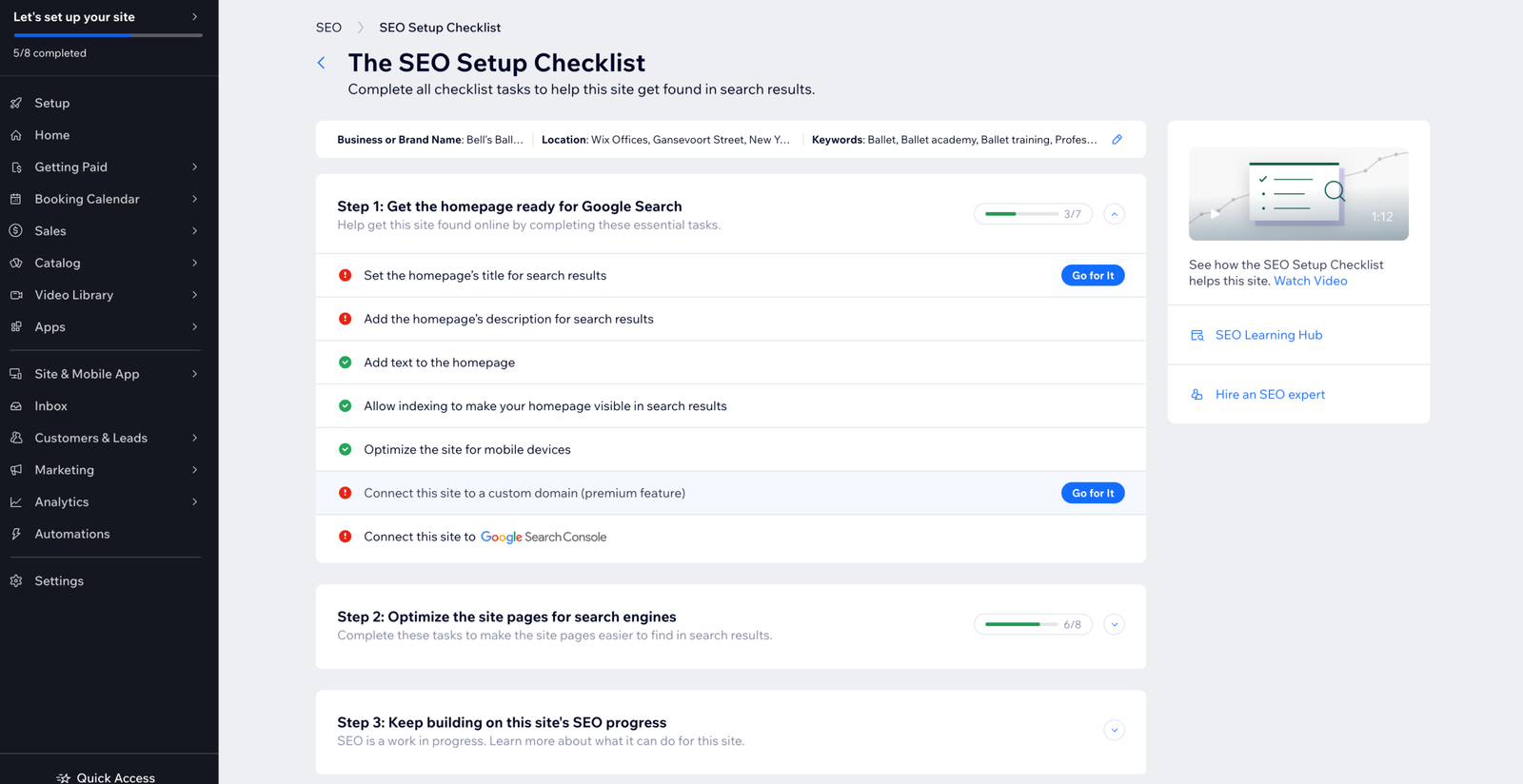
Open the SEO Setup Checklist and complete the basics for the homepage and important inner pages. Give every page a unique search title and description that accurately explains what someone will find there. Confirm indexing is enabled, add descriptive alt text to meaningful images, and connect Google Search Console when the real domain is live.
- Page title: lead with the page topic and add the brand when useful.
- Meta description: summarize the page and give the searcher a reason to click.
- URL: keep it short, readable, and stable.
- Headings: use one clear page title and organize the supporting sections logically.
- Internal links: connect related pages naturally so visitors can continue the journey.
- Domain: use the branded custom domain you control, not the temporary Wix address.
Do not wait for every SEO field to turn green before publishing useful pages. Good search performance starts with a page that answers a real question better than the alternatives. The checklist helps search engines understand that page; it cannot create the value for you.
Step 9: Preview, Test, and Publish
Preview the website on desktop and mobile, then move through it like a first-time visitor. Do not test only the happy path. Click the logo, menu, footer links, every call-to-action button, social icons, forms, and any checkout or booking flow.
- No placeholder text, demo images, fake testimonials, or empty pages remain.
- The logo returns to the homepage and the navigation works on mobile.
- Every button has a clear label and reaches the correct destination.
- Forms submit successfully and notifications reach the right inbox.
- Contact details, hours, prices, shipping rules, and policies are accurate.
- The favicon, social-sharing image, page titles, and descriptions are set.
- The domain uses HTTPS and the site is visible to search engines.
Publish once the website clearly explains the offer and the main action works. A real site can improve after feedback. A private draft cannot teach you what visitors misunderstand.
Wix Pros and Cons
The balanced verdict
Wix for a first website
What Wix does well
- Fast visual setup Templates and AI can turn a rough idea into a working draft without installing software or configuring hosting.
- Useful business tools Forms, bookings, stores, events, memberships, email, and other features live in the same ecosystem.
- Flexible visual editor You can move, resize, restyle, and reorganize page elements without writing code.
- Managed platform Hosting, platform updates, security maintenance, and the editor are managed through one account.
Where Wix can get in your way
- Too much freedom The loose canvas makes it easy to create inconsistent spacing, typography, and alignment if you edit every element separately.
- Platform lock-in You can move your domain and content later, but a finished Wix design cannot simply be exported into another website builder.
- Feature costs can stack up A custom domain and advanced business features require a paid plan, and some apps have their own subscriptions.
- Large sites need discipline A simple business or portfolio site is easy to manage. A large content operation needs stricter page, navigation, and publishing systems.
If Wix feels close but not quite right, compare it with Squarespace. Squarespace provides a more controlled design system, while Wix gives you a looser canvas and a wider collection of business tools. You can also see the strongest free starting points in our free website builder guide.
Wix Tutorial FAQs
Frequently Asked Questions
Is Wix good for beginners?
Yes. Wix is one of the easiest ways to build a visual website without buying separate hosting or learning code. The main beginner challenge is not the software. It is resisting the urge to customize every small detail before the message and page structure are clear.
Can I use Wix for free?
Wix lets you build and publish a Wix-branded site for free. A custom domain, removal of Wix branding, and advanced business features require an eligible paid plan. Build the first draft for free, then compare the complete plan you need before upgrading.
Should I use Wix AI or a template?
Use a template when you care about choosing the visual direction before you edit. Use Wix AI when you want the fastest path from an idea to a draft. Either way, replace the generated copy and images with specific information about your work, offer, and audience.
Is Wix better than WordPress?
Wix is easier if you want one company to manage the editor, hosting, updates, and support. WordPress gives you more ownership, portability, and long-term flexibility, but it also adds hosting and maintenance decisions. Read our Wix vs WordPress comparison for the full decision.
Can I sell products on Wix?
Yes. Wix supports products, payments, inventory, shipping, digital goods, and other commerce features on eligible plans. If the store is the entire business, use our online store guide to compare Wix with dedicated ecommerce platforms before committing.
Does Wix include hosting and security?
Yes. Wix includes managed hosting, platform updates, SSL, and service-level security. You do not buy a separate shared hosting account. You still need strong account security, careful app choices, backups of important business data, and normal website privacy practices.
Can I move a Wix site later?
You can move the domain and manually transfer much of the content, but you cannot export the completed Wix design into WordPress, Squarespace, or another builder. Keep copies of your original writing, images, contacts, product data, and domain credentials.
Is Wix good for SEO?
Wix provides the core technical controls most small sites need, including titles, descriptions, indexing settings, redirects, image alt text, structured data tools, sitemaps, mobile support, and Search Console integration. Rankings still depend much more on useful content, clear pages, authority, and links than on the builder alone.
Build the Smallest Wix Site That Does the Job
Wix works best when you use its flexibility with restraint. Choose a template, establish the global styles, build the essential pages, replace every demo element, test the mobile version, and publish a clear path for the visitor.
Do not judge the first version by how many effects, apps, or sections you added. Judge it by whether the right person understands what you offer and can take the next step without getting lost.
If that is the kind of site you need, start your Wix site here. If you still need to choose a platform, use our best website builders guide to compare Wix with the other leading options.