If you are starting with no audience, begin with a service business. Sell one clear result to one specific customer before you build a course, order inventory, or spend six months publishing content. A service gives you the fastest useful signal: someone either pays for the outcome or they do not.
The best online business idea is not the one with the biggest theoretical upside. It is the one you can test with the skills, time, and access you have now. This guide ranks ten realistic ideas by how quickly they can produce proof, then shows the website each model needs.
My direct recommendation: Start with a focused service, get one customer, and document the work. The repeated parts can become a productized service, template, course, or software tool later.
Online business models compared
Most online business ideas fit one of four models. The model matters more than the trendy label because it determines what you must build before a customer can pay you.
| Start here Service business | Digital product | Audience business | Store or software tool | |
|---|---|---|---|---|
| Best first move | Sell one clear outcome to one customer | Solve one repeatable problem with a small download | Publish consistently for one narrow audience | Validate the product before building the system |
| Speed to proof | Usually quickest | Moderate | Usually slowest | Moderate to slow |
| Upfront load | Low: skill, outreach, simple site | Low to moderate: creation and checkout | Low cash, high time commitment | Highest: inventory, code, or operations |
| Website job | Explain the offer and collect leads | Show the result and complete checkout | Publish, capture email, build trust | Sell, deliver, support, and retain |
| Main risk | Selling too many vague services | Creating before confirming demand | Publishing without a useful point of view | Building expensive infrastructure too early |
Swipe to compare more options. Service business stays pinned.
Speed means speed to a real demand signal, not guaranteed income. Your skills, audience, offer, and outreach determine the result.
1–4. Service businesses: the fastest way to test demand
A service business sells a result you can deliver with a skill. You do not need a giant following, a warehouse, or a finished product library. You need a customer with a specific problem and enough proof that you can solve it.
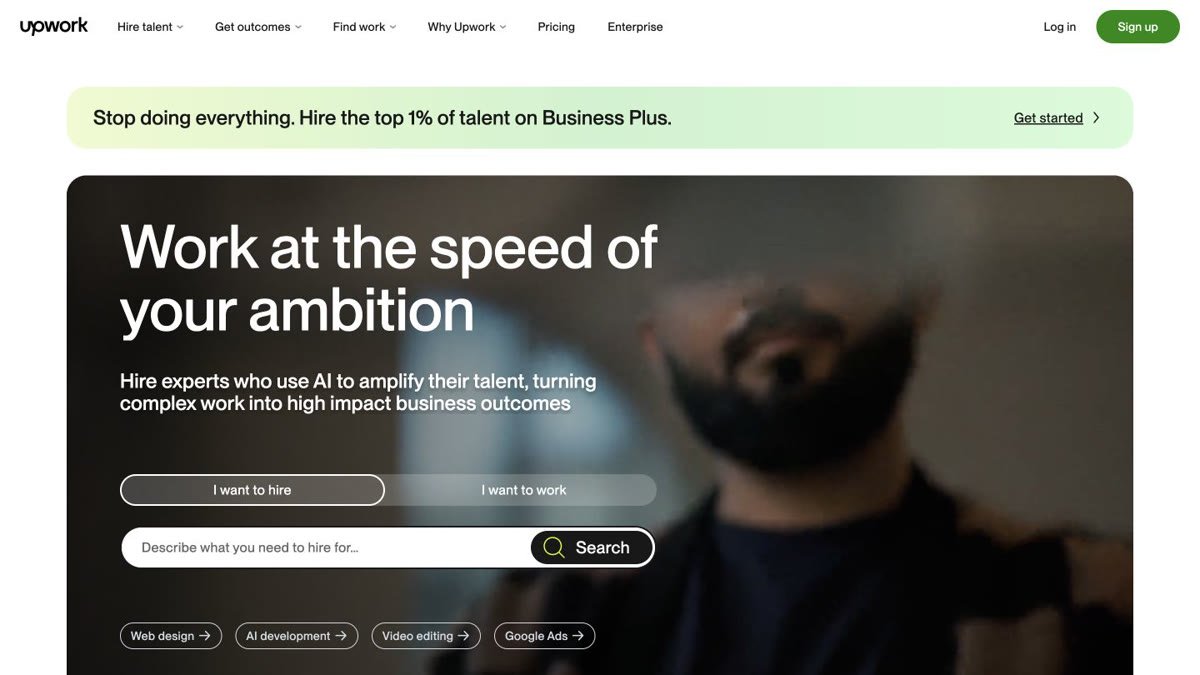
Marketplaces such as Upwork can expose you to real project descriptions and buyer language. Use them for research or early work, but keep building your own proof, referrals, and website so one platform does not control the entire pipeline.
1. Freelance a skill you already use
Writing, editing, design, bookkeeping, paid-ad setup, video editing, research, and web work can all become online services. Do not advertise yourself as someone who can “help with marketing.” Package a concrete result such as four edited short videos, a five-email welcome sequence, or a one-page website.
2. Turn the skill into a productized service
A productized service has a fixed scope, process, and starting price. The customer knows what arrives and you stop writing a custom proposal for every lead. Good examples include a homepage teardown, podcast editing package, local SEO setup, or brand-photo selection service.
3. Consult or coach around a result you have achieved
Consulting and coaching work when you can diagnose a problem, guide a decision, or shorten a process you understand firsthand. Lead with the result and proof, not a broad life-coach label. If you cannot point to a process you have used, keep building experience before charging for advice.
4. Run remote operations as a virtual assistant
Inbox management, calendar coordination, research, customer support, publishing, and simple automation are easier to sell when bundled around a type of customer. “Podcast operations for independent coaches” is clearer than “I can do anything you need.”
My beginner pick
Start with a focused service business
Why this is the strongest first test
- You can sell before building much A clear offer, a short proof sample, and direct outreach can test demand before you invest in products, ads, or a large website.
- Customer work teaches you what matters Real questions, objections, and repeated requests reveal the product or content worth building next.
- The startup stack stays simple You need a way to explain the outcome, show proof, collect inquiries, and deliver the work. Most beginners can set that up quickly.
What you still have to solve
- Income begins tied to delivery You earn by doing the work. Raise prices, narrow the scope, or productize the process only after customers prove what they value.
- You have to ask for the sale A polished site will not replace outreach. Send specific pitches, talk to potential customers, and follow up.
- A vague service is hard to buy Choose one customer, one painful problem, one deliverable, and one next step. General capability lists create indecision.
Your first service website can be small. The clip below shows the start of a Services page in WordPress, cropped to the useful interface. Build one page that names the customer, outcome, deliverable, proof, and next step.
Our business website guide walks through the complete build. If your work itself is the proof, use the portfolio website guide to turn finished projects into case studies.
5–6. Digital products: build after the problem repeats
A digital product sells the same solution more than once. That sounds easier than client work, but the product only helps if you understand the buyer’s exact problem. Service conversations are often the fastest way to learn it.
5. Sell a template, checklist, or small download
Start with the smallest useful version: a spreadsheet, design template, contract-question checklist, preset, swipe file, or short guide. The product should save a defined person time or prevent a specific mistake. “Business planner” is vague. “Weekly cash-flow sheet for solo photographers” gives the buyer a reason to care.
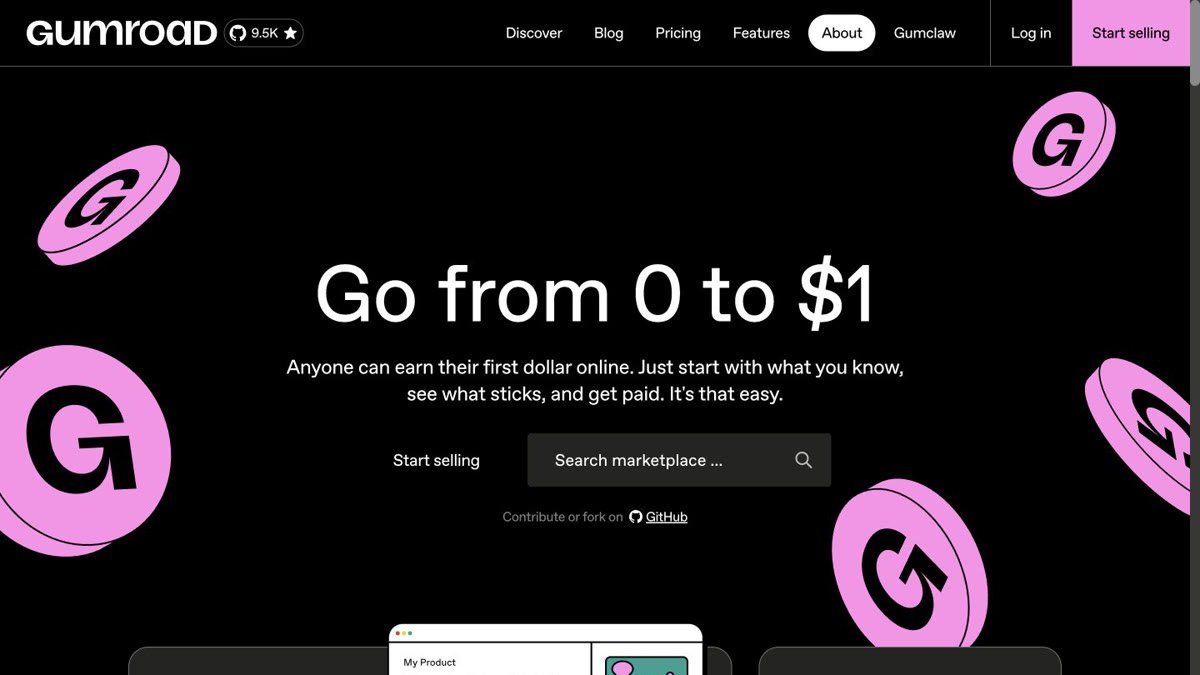
A hosted checkout such as Gumroad can test the first product without a complex store. Once sales, search traffic, or an email list justify more control, move the product into a site you own.
6. Teach a live workshop before recording a course
A live workshop forces you to find buyers before spending weeks recording lessons. Teach one outcome, watch where people get stuck, collect the questions, and improve the material. Record a polished course only after the live version proves that the problem is worth paying to solve.
Do not build the full library first. Pre-sell a small product or run the lesson live. A finished product with no buyer feedback is still an untested idea.
7–8. Audience businesses: slow proof, valuable ownership
An audience business earns attention before it earns much money. The upside is trust and distribution you can use for services, affiliates, sponsorships, memberships, or products. The cost is time. You must keep publishing before the result feels obvious.
7. Build a niche blog or resource site
Choose a narrow audience with recurring questions, then publish answers with real examples. A useful niche is specific enough to earn recognition but broad enough to support dozens of worthwhile pages. Our niche website examples show how focused sites organize content, tools, products, and recommendations around one group.
The WordPress blog guide covers the technical setup. The business work is choosing the reader, finding questions you can answer better, and publishing long enough to learn which topics deserve expansion.
8. Publish a newsletter or paid community
A newsletter becomes a business when readers expect a useful result from opening it. Curated opportunities, practical analysis, original research, job leads, or a tight professional briefing can work. “My thoughts every Friday” is not a strong promise unless people already know why your thoughts matter.
A paid community needs an ongoing reason to remain. Access alone is weak. Feedback, accountability, live help, a valuable database, or member-to-member opportunity gives the subscription a job.
Own the contact list. Social reach can help discovery, but collect permission to email people and keep the website as the permanent home for your best work.
9–10. Product and software businesses: validate before infrastructure
Physical products and software can scale without tying every sale to your time, but they introduce more moving parts. Inventory, suppliers, returns, code, support, payments, and customer acquisition all become part of the business.
9. Open a focused ecommerce store
Pick a customer and buying problem before picking a random catalog. A focused store can sell your own products, sourced inventory, made-to-order goods, or carefully selected products from a supplier. Dropshipping removes warehouse ownership, but it does not remove product quality, delivery, refunds, advertising, or customer support.
This CAPW storefront clip shows the kind of clear product page a buyer needs: useful images, specific copy, visible options, price, availability, and one obvious purchase action.
Use our online store guide when you are ready to build the full checkout, product, payment, shipping, and testing workflow.
10. Build a micro-SaaS product or simple web tool
A small software business solves one repeated task with a focused tool. The first version can be a spreadsheet, manual concierge service, form, or no-code workflow behind the scenes. If people will not use the manual version, more code will not rescue the idea.
Interview potential users, watch them handle the task now, and ask for a real commitment before building advanced features. Keep the first promise narrow enough to explain in one sentence.
How to choose the right online business idea
Do not choose by maximum income claims. Choose by what you can prove with the least irreversible effort.
| What you have now | Best starting model | First proof to seek |
|---|---|---|
| A useful skill but no audience | Focused service | One paid project from direct outreach |
| Repeated client requests | Productized service or template | Three buyers for the same scope |
| Deep topic knowledge and publishing stamina | Blog or newsletter | Returning readers and email replies |
| A proven lesson people ask you to teach | Live workshop | Paid seats before recording a course |
| Product insight plus operational capacity | Focused store | Preorders or a small tested batch |
| A repeated workflow people hate | Manual tool, then micro-SaaS | Active users before advanced code |
Write down the customer, painful situation, result, and smallest paid offer. If any of those are blank, the next step is customer research, not a logo, legal entity, or elaborate website.
A seven-day demand test
- Pick one customer. Name a role, business type, or audience you can reach.
- Choose one painful problem. Use language people already use, not a category label you invented.
- Write one offer. State the result, deliverable, boundary, and next step.
- Create one proof sample. Show a small before-and-after, teardown, example, prototype, or useful excerpt.
- Put it on one page. Include the offer, proof, who it is for, and a contact or checkout action.
- Talk to ten relevant people. Ask about the current process and invite the right person to buy the test version.
- Use the response. Improve a clear objection. Change the offer when nobody cares. Do not hide from weak demand by redesigning the page.
A test is not a guarantee. Seven days is enough to collect real conversations and behavior. Some offers need more trust, proof, or access before the first sale.
Build only the website this model needs
Your website should make the next transaction easier. A freelancer needs proof and a contact path. A blogger needs readable content and email capture. A store needs trustworthy product pages and tested checkout. Adding pages that do not support the next decision creates maintenance, not momentum.
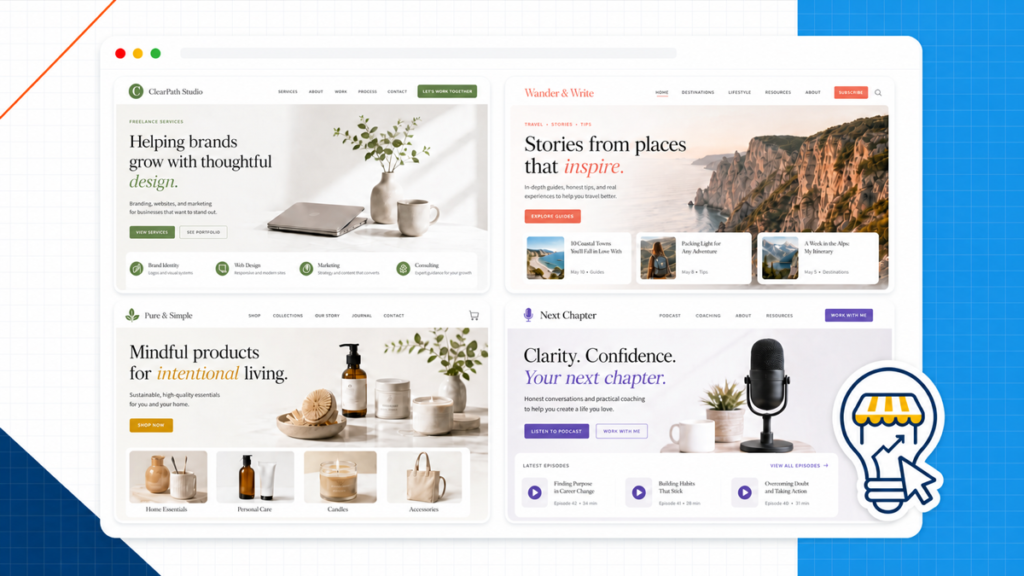
Here is a quick look at the finished website directions available in the current CAPW build system, from stores and service sites to personal portfolios:
If you want the full beginner workflow, start with How to Create a Website Step by Step. Choose the business, portfolio, blog, or store guide once the model is clear.
Frequently Asked Questions
What is the easiest online business to start?
A focused service is usually the easiest model to test because you can sell a skill before building inventory, a large audience, or a product library. Make the offer specific: one customer, one outcome, one deliverable, and one next step.
Can I start an online business with no money?
You can test some services with tools and skills you already have, but no business is free. You still invest time, internet access, outreach, delivery, and often a domain or basic software. Treat “no money” as “low upfront cash,” not “no cost.”
What is the most profitable online business?
There is no model that is automatically the most profitable. Services can reach revenue quickly. Digital products and software can scale with lower delivery cost. Ecommerce can become large but carries more operational expense. Profit comes from demand, pricing, acquisition cost, delivery, and retention.
How long does it take to make the first sale online?
It varies by offer, trust, proof, price, and access to buyers. A focused service can sometimes be tested quickly through direct outreach. An audience business often takes longer because readers must discover and trust the work first. Avoid anyone promising a guaranteed timeline.
Do I need a website before finding a customer?
Not always. A marketplace profile, direct conversation, or simple payment link can help test the first offer. Build a basic website when you need a permanent home for proof, search visibility, email capture, direct inquiries, or checkout.
Is dropshipping a good online business for beginners?
Dropshipping removes the need to hold inventory, but it does not remove supplier risk, slow delivery, refunds, advertising costs, product quality, or customer support. It is a hands-on retail business, and it is rarely the simplest first test.
Can AI run an online business for me?
AI can speed up research, drafts, design exploration, support, and simple automation. It does not create demand, earn trust, accept legal responsibility, or replace your judgment. Generic AI output is easy to copy, so the offer still needs specific expertise or access.
Do I need a business license or have to collect taxes?
Rules depend on your location, entity, product, and where customers live. Check the official state and local requirements where you operate, and use a qualified tax or legal professional when the answer affects registration, sales tax, contracts, or liability.
The bottom line
Start with the smallest offer that can produce a real yes or no. For most beginners, that means one focused service sold to one specific customer. Deliver it well, pay attention to the repeated problems, and let those lessons tell you whether to build a product, audience, store, or tool next.