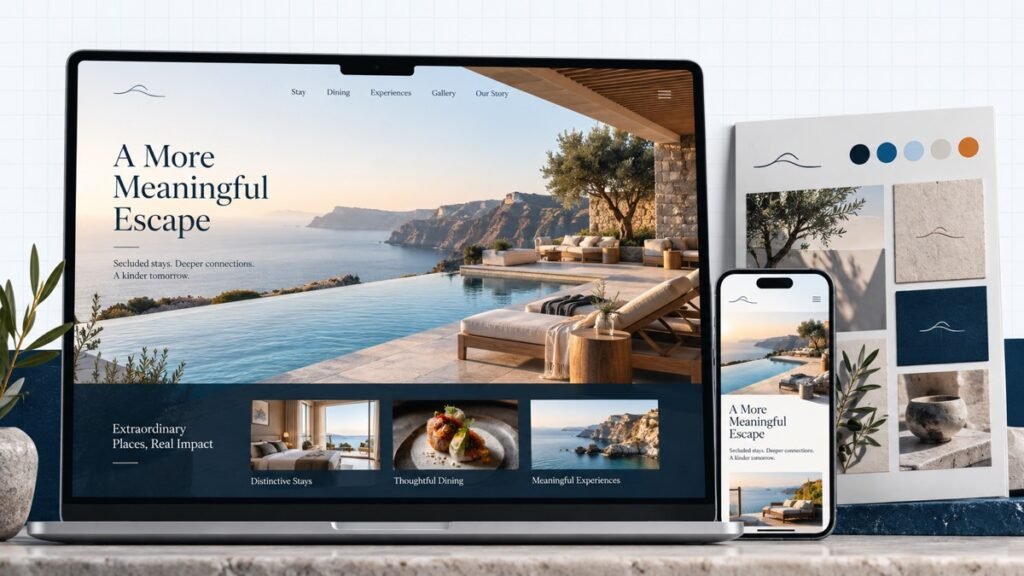
A $10,000 website is not expensive because the code took a long time to type. It is expensive because the strategy, visual system, media, interaction, testing, and handoff solve a valuable business problem. Claude Code can speed up production, but the deliverable still needs a professional process.
Quick answer: Define the offer and conversion goal, create a reusable brand kit, approve reference assets, build the site in controlled stages, test every interaction, and package the source, hosting, domain, analytics, and editing instructions for the client.
The walkthrough below shows the strategy, asset, build, QA, and publishing work behind the final high-end site.
What the client is actually buying
| Deliverable | Question it answers | Proof of completion |
|---|---|---|
| Strategy | What should this page make visitors do? | Approved brief and conversion path |
| Brand system | How should the business feel? | Colors, type, imagery, voice, examples |
| Website | Does the experience work? | Responsive, accessible, tested build |
| Handoff | Can the client own it? | Accounts, source, training, maintenance plan |
Claude can help with each layer. It cannot approve its own work or decide what a client should promise customers.
1. Price the outcome and scope
Write the scope before the build: pages, integrations, content responsibilities, revision rounds, launch date, and what happens after launch. If the client expects copywriting, product photography, custom animation, CRM integration, and unlimited changes, that is not a five-page website. Price and schedule it accordingly.
Define what success looks like. A coffee brand may need preorders. A consultant may need qualified calls. A local service company may need quote requests. That goal controls the hierarchy of the page.
2. Build the brand kit inside the project
Ask the brand questions before the first page exists. The answers become constraints the build can reuse.
Use Claude to turn discovery notes into a concise brand file: audience, positioning, tone, color palette, typography, image treatment, and interface rules. The file should be specific enough that another designer could make a matching section without guessing.
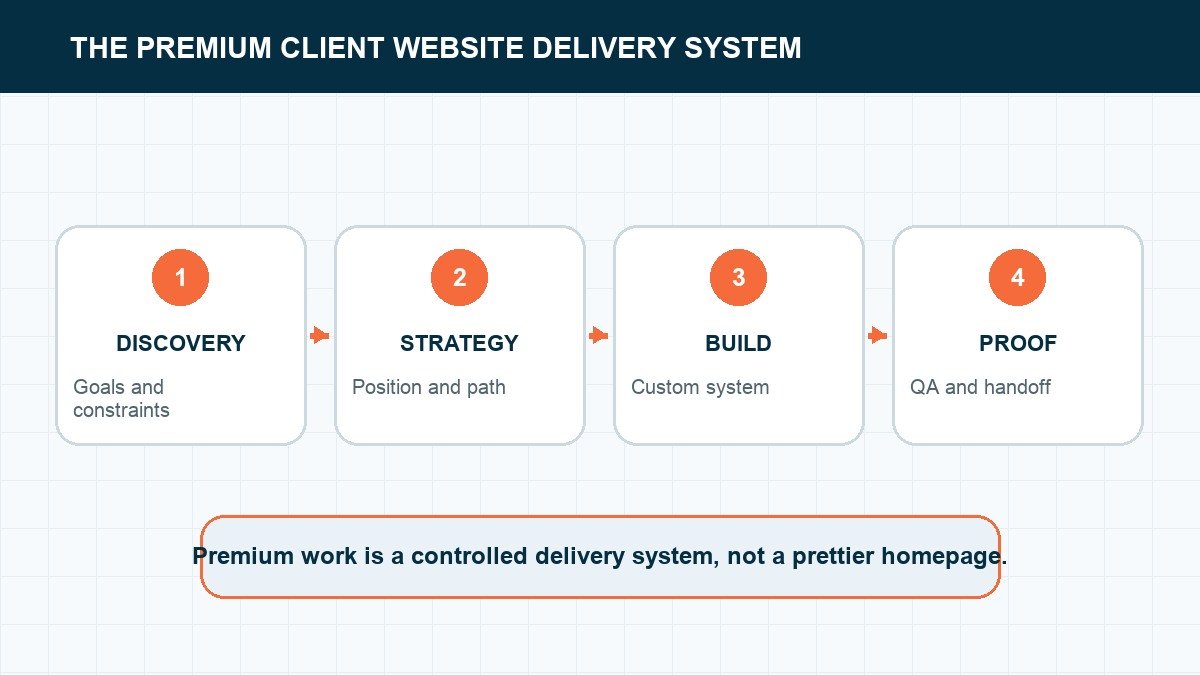
Ask the client to approve this direction before you generate a library of assets. An early disagreement costs a meeting. A late disagreement costs a rebuild.
3. Create a small reference library
Use reference images to communicate composition and mood. Record what you are borrowing so the result is directed, not copied.
Generate or source the product, environment, texture, and motion references required for the page. Track where each asset came from and confirm commercial usage rights. Use the same color, materials, lighting, and mood across the set.
For AI media, watch hands, labels, packaging, reflections, and impossible geometry. The image can feel premium at a glance while falling apart when the visitor looks for two seconds.
4. Build in stages with five focused prompts
A focused build prompt points to approved assets and rules instead of asking Claude to invent the whole project in one pass.
- Brand kit: translate discovery into reusable rules.
- Reference assets: establish the visual world.
- Hero media: create the main motion or image treatment.
- Design standard: define layout, spacing, responsive, and accessibility rules.
- Website build: assemble the approved pieces into a working experience.
Separate prompts create review points. They also make it easier to diagnose whether a weak result came from the strategy, the asset, or the implementation.
5. Test the expensive details
Treat a custom hero video as a performance and messaging decision. It needs a fallback image, readable overlay copy, and a mobile plan.
Review the moving asset and the finished page separately. The video can pass its creative review while the page still fails contrast, load time, or reduced-motion behavior.
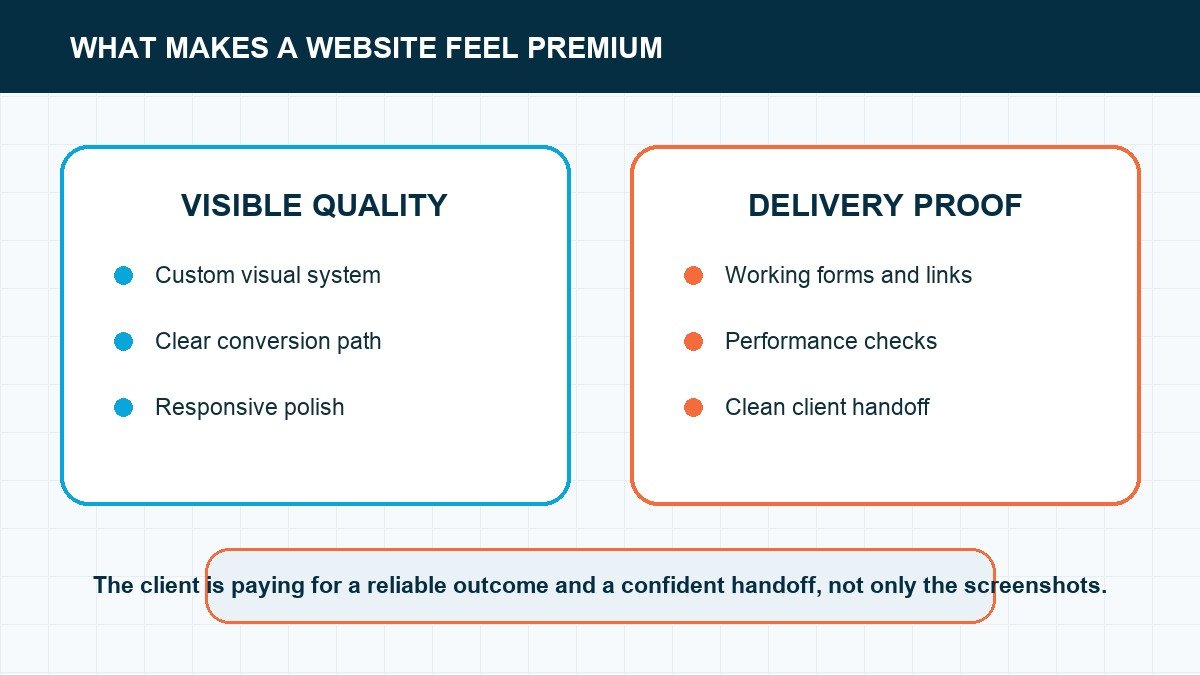
- Motion: scroll effects stay smooth and respect reduced-motion settings.
- Mobile: the experience still works without relying on desktop hover or giant video.
- Performance: media is compressed and lazy-loaded where appropriate.
- Accessibility: contrast, focus states, headings, labels, and keyboard navigation work.
- Conversion: the primary action is obvious and every form is tested.
- Browsers: the page works in current Chrome, Safari, and Firefox.
This is where the price becomes visible. Anyone can show a dramatic desktop hero. A professional delivers the less glamorous states too.
6. Hand over ownership
Move the domain, hosting, analytics, repository, media library, and third-party accounts into the agreed ownership structure. Provide a short recording that shows the client how to update common content. Document backups, software updates, support, and what changes require a new scope.
If the site depends on a local build command only you understand, the handoff is unfinished.
Write a scope that protects the result
Define the page count, content responsibilities, revision rounds, integrations, browser support, launch work, training, and post-launch support before production begins. Also define what is not included. “A five-page website” can quietly become copywriting, photography, logo design, booking software, email migration, and unlimited revisions if the proposal leaves those decisions open.
Use milestones that create visible approvals: strategy, wireframe, visual direction, working build, content lock, and launch. When a client approves each layer, you can move faster without using code changes to solve an unresolved strategy problem.
Give Claude Code controlled context
Keep a project brief, brand rules, content file, component inventory, and acceptance checklist in the repository. Ask for focused changes and review the diff before accepting them. A broad prompt can solve the visible request while changing unrelated components, dependencies, or responsive behavior.
Do not place client secrets in prompt files or commit them to the repository. Use environment variables, separate staging credentials, and the minimum access required. Run dependency, accessibility, and security checks before launch, then review the results as a developer rather than treating a clean report as proof that the site is risk-free.
Measure quality with evidence
- Responsive: key pages work at phone, tablet, laptop, and wide-screen sizes.
- Accessible: keyboard navigation, focus states, labels, heading order, contrast, and reduced motion are checked.
- Functional: forms, menus, payments, downloads, and third-party integrations complete real tests.
- Fast: images, fonts, scripts, and video are optimized for the final hosting environment.
- Owned: domain, source, analytics, media licenses, and account access are transferred as promised.
That evidence belongs in the handoff. A client does not need a pile of technical screenshots, but they should receive a concise record of what was tested, what they own, and who handles the next update.
Use our business website guide to plan the conversion path, our website design guide to review the visual system, and our website security guide before launch.
High-end means fewer unresolved decisions
A high price does not come from using more animation or telling the client that AI was involved. It comes from removing expensive uncertainty. The audience is clear. The offer is positioned. The proof is credible. The visual system supports the brand. The website loads, converts, and can be operated after handoff. Claude Code can accelerate the production work, but the valuable part is the chain of decisions that makes the output dependable.
Show that chain in the project record. Keep the approved scope, content source, sitemap, brand kit, references, asset rights, prompt history, revision decisions, and QA results together. When the client asks why a page looks or behaves a certain way, you should be able to point to an approved goal instead of saying the model generated it.
Our website design guide is a useful baseline for the hierarchy, spacing, and trust decisions that should be explicit before custom code begins.
Stage approvals around the cost of change
Approve strategy and content direction before visual production. Approve the brand kit and references before generating a full asset set. Approve the homepage direction before building every page. Approve the working staging site before connecting production services. Each gate catches disagreement while the change is still cheap.
Define what feedback belongs at each gate. A strategy review is the place to challenge the audience or offer. A visual review is the place to challenge color, typography, imagery, and composition. A staging review is the place to test content, interactions, responsiveness, and forms. Mixing all three at the end creates endless revisions because every comment can invalidate work underneath it.
Record the approved version and the person who approved it. That protects the client too: they can see which decisions are locked, what remains open, and what a new request will change in scope.
Test proof, performance, and failure states
Verify every testimonial, logo, credential, statistic, case-study result, and project image against the client's source. Remove placeholder proof even when it makes the layout look better. Check image licenses and written permission for client marks. A premium visual treatment makes an unsupported claim more dangerous, not more credible.
Measure the production page on a real phone and an ordinary connection. Compress hero media, define poster images, respect reduced-motion settings, lazy-load below-the-fold assets, and keep the primary message readable before animation runs. Test the form failure state, empty CMS state, broken image fallback, 404 page, mobile menu, keyboard navigation, and a page with an unusually long title.
Run the security and ownership pass on staging. Limit credentials, remove test users and exposed keys, patch dependencies, confirm backups, and document how the site is deployed. Use our website security guide before connecting the production domain.
Hand over the business asset, not just the files
Transfer or document ownership of the domain, hosting, repository, deployment service, analytics, forms, email delivery, fonts, stock licenses, and paid tools. Give the client the source and build instructions, but also give them the operating instructions: how to edit safe content, publish, review leads, update dependencies, restore a backup, and request a change that needs development.
Finish with a verified launch record. Capture the production URL, release commit, backup, form test, analytics event, performance snapshot, responsive screenshots, and the open issues the client accepted. That evidence is what turns a fast AI-assisted build into professional delivery.
Price revisions and support separately
Separate the fixed build from open-ended exploration and post-launch support. State how many strategy, visual, and staging review rounds are included, what counts as a revision, and what becomes a new feature. AI may reduce production time, but it does not make a late change to positioning, page structure, or platform choice free.
Offer maintenance around outcomes the client can understand: verified backups, dependency updates, form checks, uptime review, small content changes, and a defined response window. Keep new campaigns, pages, integrations, and redesigns out of that bucket. A clean boundary protects the margin and gives the client a dependable way to request work after launch.
Report maintenance with evidence, not a vague “all good.” Return the backup date, versions updated, forms tested, incidents found, performance change, edits completed, and decisions that still need the client. That keeps the premium relationship tied to a visible operating result.
Frequently asked questions
Frequently Asked Questions
Can Claude Code build a full client website?
Yes, especially for custom front-end projects. You still need to direct the strategy, review generated code, test the build, and create a maintainable handoff.
How do you justify a high website price when AI is faster?
Price follows value, scope, risk, and responsibility. Faster production can improve your margin; it does not remove discovery, creative direction, content, QA, and ownership.
Should clients know AI was used?
Follow your contract, client policy, and applicable law. Be especially clear about generated media, data handling, licensing, and any ongoing platform dependency.
Sell the system, then use AI to move faster
Claude Code can compress production time. The client still pays for a clear strategy, a distinctive visual system, a site that survives real use, and a handoff that does not depend on you forever. That is the work worth building a premium offer around.